
Large-Scale Cabinet Fleet for Industrial Cost Optimization — in Türkiye
Project Overview
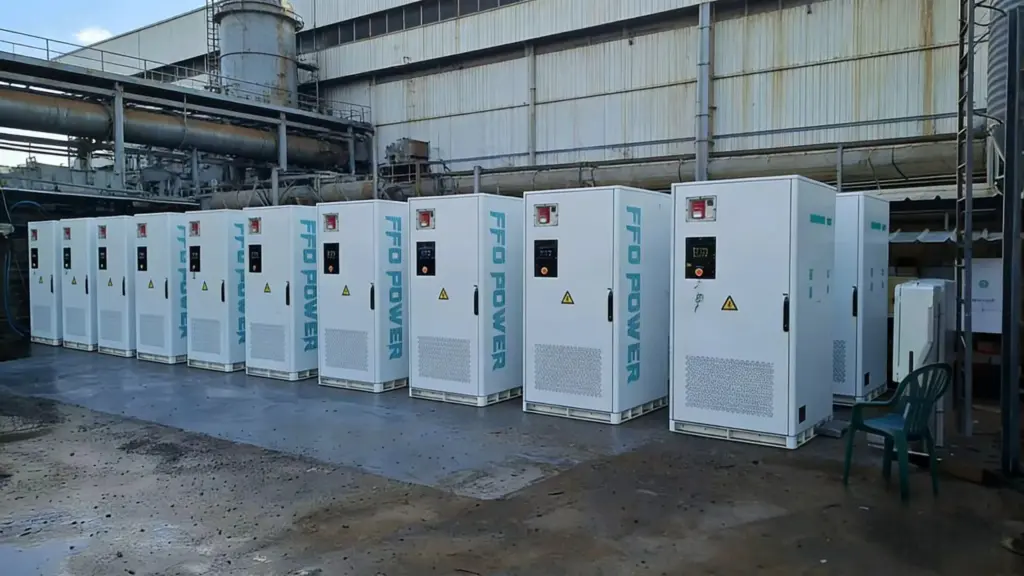
BESS for TOU Arbitrage in Türkiye demonstrates a utility-style behind-the-meter deployment of 26 cabinet BESS units (total 3.25MW / 6.79MWh) for industrial peak/off-peak optimization. By charging during low-tariff periods and discharging during high-tariff windows, the BESS reduces energy cost exposure and can also mitigate short demand spikes that drive capacity charges. The EMS coordinates multi-cabinet dispatch, SOC balancing, and safety constraints to operate the fleet as a single controllable resource with stable performance.
Project Background
Industrial electricity tariffs in Türkiye often include meaningful time-of-use differentials and demand-based components, making energy management a material lever for operating cost reduction. At sites with large and variable loads, short-duration peaks can amplify demand charges, while daily TOU spreads create arbitrage opportunities. A cabinet-based BESS fleet provides flexible power: it time-shifts energy purchases, caps peaks, and improves the predictability of site demand. For a multi-cabinet plant, fleet-level coordination—SOC management, setpoint allocation, and protection consistency—is essential to sustain reliable operation and avoid uneven cycling.
Project Challenge
- Fleet Dispatch and SOC Balance: Operate 26 cabinets as one plant while preventing unit-to-unit SOC drift and uneven utilization.
- TOU Arbitrage plus Demand Control: Capture tariff spreads without creating new peaks during charging; enforce charge limits and demand caps.
- Industrial Reliability and Safety: Maintain stable operation under harsh industrial conditions with clear alarms, event logs, and protection interlocks.
FFD POWER Solution
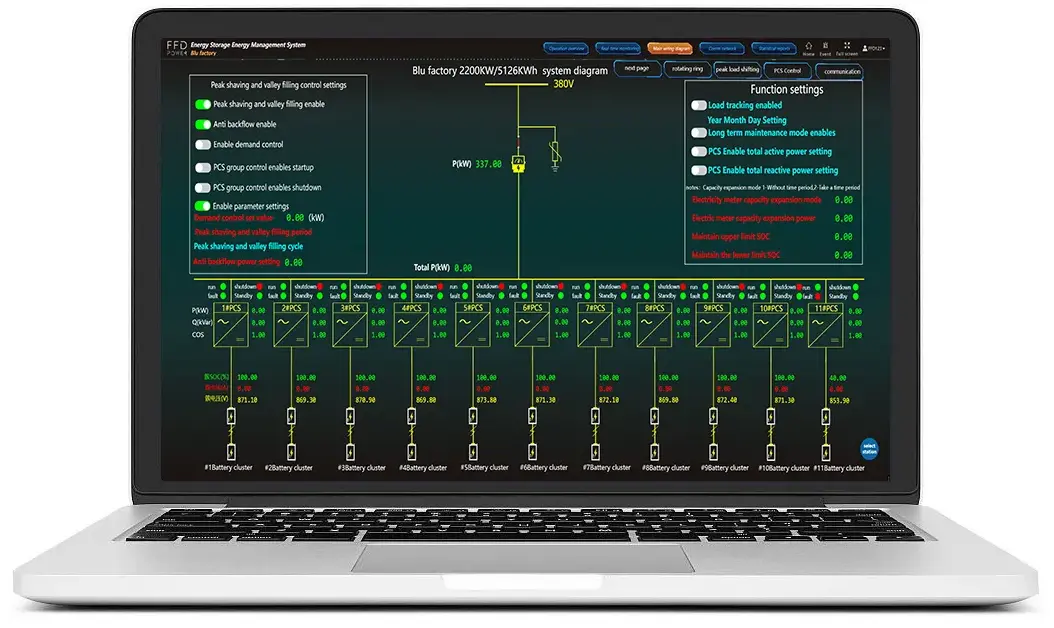
FFD POWER delivered a 26-cabinet BESS plant based on 125kW/261kWh modules, integrated with an EMS configured for TOU arbitrage and fleet management. The EMS aggregates site measurements and dispatch schedules, then allocates plant-level power commands across cabinets using SOC and availability weighting. Charging is scheduled in off-peak hours under a power-limited profile to avoid demand spikes, while discharge is executed during peak tariff windows and can be overlaid with an import cap to reduce demand charges. Continuous SOC balancing and protection logic keep performance consistent across the fleet.
System Specifications
- BESS POWER : 3.25 MW (125 kW × 26)
- BESS capacity : 6.79 MWH (261 kWh × 26)
- Product used : Galaxy261L Cabinet-type all-in-one BESS (multi-cabinet fleet)
- Application : TOU arbitrage + demand peak shaving (industrial site)
- Architecture: EMS with TOU schedule + fleet SOC balancing + optional import cap & logging
Operational Logic: TOU Scheduling + Fleet Allocation + SOC Balancing
The EMS logic maximizes bill savings while coordinating 26 cabinets safely and efficiently:
- Off-Peak Charging Schedule: charges under a configured power limit during low-tariff windows, ensuring SOC headroom and avoiding new demand peaks.
- Peak Discharge Dispatch: discharges during high-tariff periods to reduce costly grid purchases; can overlay a site import cap to shave peaks.
- Fleet SOC Balancing: distributes setpoints based on SOC and availability to prevent drift and equalize utilization across cabinets over time.
FAQs
The BESS for TOU Arbitrage in Türkiye project is a large-scale behind-the-meter Battery Energy Storage System (BESS) deployment (3.25 MW / 6.79 MWh) designed to optimize industrial electricity costs by charging during off-peak (low tariff) hours and discharging during peak (high tariff) periods under time-of-use (TOU) pricing. The system also helps mitigate short demand spikes that drive capacity charges.
TOU arbitrage uses the BESS to shift energy consumption from high-tariff periods to low-tariff periods. The system charges batteries when electricity prices are lowest (off-peak) and discharges them when prices are highest (peak), reducing expensive grid purchases and lowering overall energy costs. The EMS coordinates charging schedules and discharge dispatch to maximize savings while managing demand limits.
Key challenges include:
- Coordinating 26 BESS cabinets to operate as a single dispatchable resource without unit-to-unit SOC drift.
- Balancing TOU arbitrage and demand control to avoid creating new peaks during charging.
- Ensuring industrial reliability and safety with robust protection logic, alarms, and interlocks.
Effective fleet SOC balancing and EMS scheduling are essential to address these challenges.
The Türkiye TOU arbitrage BESS comprises 26 Galaxy261L cabinet-type all-in-one BESS units, delivering a total power of 3.25 MW and a storage capacity of 6.79 MWh. The solution integrates an Energy Management System (EMS) that manages TOU charging, peak discharge, SOC balancing, and optional import capping to shave demand charges.
The EMS is central to maximizing TOU arbitrage value. It:
- Schedules off-peak charging under a power-limited profile to avoid new demand peaks.
- Executes peak period discharges to reduce grid imports during high tariff windows.
- Implements fleet SOC balancing to distribute setpoints based on SOC and availability, ensuring consistent performance and preventing uneven cycling across the BESS fleet.
