
Utility-Scale Modular Deployment for Price Spreads — in Czechia
Project Overview
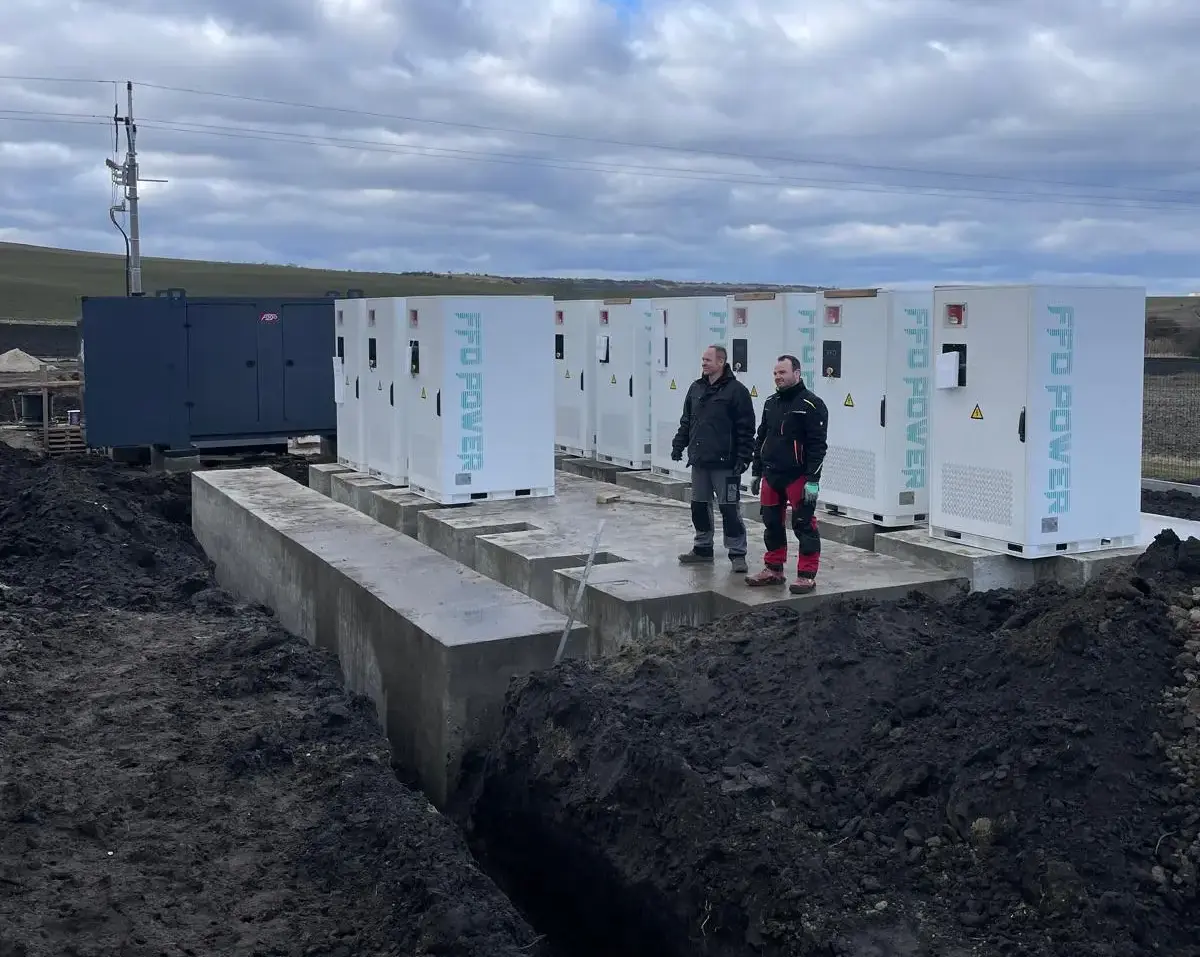
BESS for TOU Arbitrage in Czechia demonstrates a modular deployment of 12 cabinet BESS units (total 1.5MW / 3.13MWh) designed to capture electricity price spreads through time-of-use (TOU) arbitrage. By charging during low-price periods and discharging during higher-price windows, the project improves asset utilization and creates predictable revenue opportunities. The EMS coordinates dispatch scheduling, SOC targeting, and grid compliance to ensure stable operation across all cabinets, even under outdoor site conditions.
Project Background
In liberalized European power markets, intraday and day-ahead price volatility can create meaningful spreads between low-demand and peak-demand hours. Battery storage can monetize these spreads when it is dispatched with accurate scheduling, reliable telemetry, and disciplined SOC management. For modular cabinet fleets, the control strategy must keep all units balanced, prevent SOC drift, and maintain availability despite weather, site constraints, and grid-side limits. This project in Czechia deploys a cabinet-based BESS plant optimized for TOU arbitrage with scalable, repeatable commissioning.
Project Challenge
- Fleet Coordination: Dispatch 12 cabinets as one resource while balancing SOC and preventing unit-to-unit drift.
- Revenue Optimization vs. Degradation: Capture price spreads without excessive cycling; enforce SOC windows and power limits to protect battery life
- Outdoor Site Robustness: Maintain stable operation and logging under variable weather and site conditions, with clear alarms and event records for O&M.
FFD POWER Solution
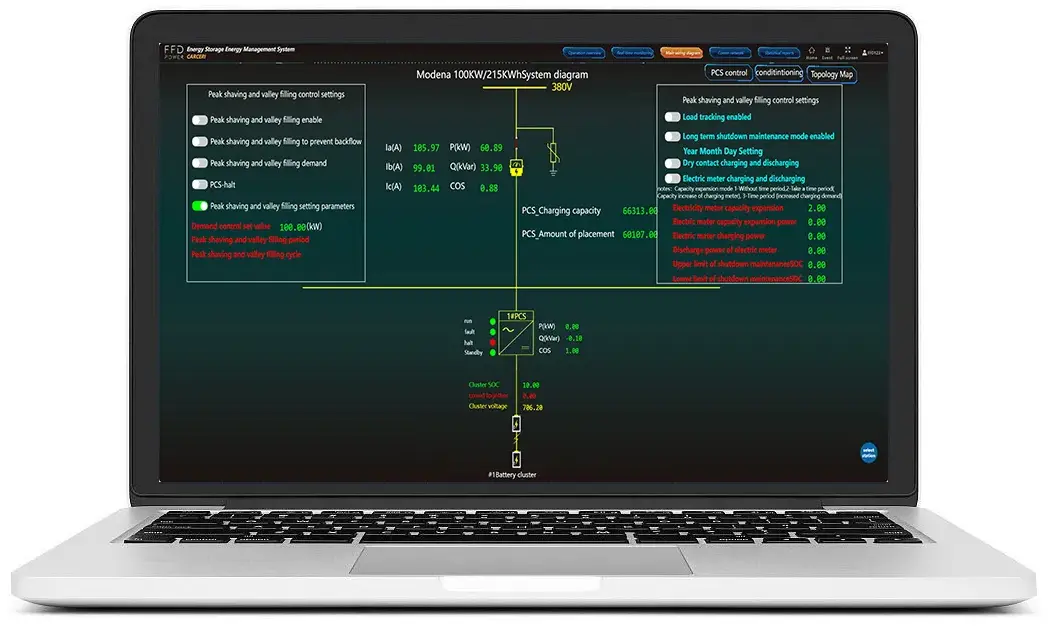
FFD POWER delivered a 12-cabinet BESS plant based on 125kW/261kWh modules, integrated with an EMS designed for arbitrage dispatch and fleet management. The EMS aggregates power commands, allocates setpoints across cabinets, and actively balances SOC to keep the fleet aligned. Day-ahead or intraday schedules drive charging/discharging windows, while protection constraints, ramp limits, and SOC windows ensure safe operation and consistent performance reporting.
System Specifications
- BESS POWER : 1.5 MW (125 kW × 12)
- BESS capacity : 3.13 MWH (261 kWh × 12)
- Product used : Galaxy261L Cabinet-type all-in-one BESS (multi-cabinet plant)
- Application : TOU arbitrage (scheduled charge/discharge)
- Architecture: EMS with dispatch scheduling + fleet SOC balancing + logging & alarms
Operational Logic: Arbitrage Scheduling + Fleet SOC Balancing
The EMS logic maximizes arbitrage revenue while keeping the cabinet fleet balanced and battery-safe:
- Schedule-Based Dispatch: executes day-ahead/intraday charge and discharge windows based on price signals, respecting site power limits.
- Fleet Setpoint Allocation: distributes plant-level power commands across cabinets using availability and SOC weighting to avoid over-stressing individual units
- SOC Window & Balancing Control: enforces SOC bounds and runs balancing logic to prevent drift, ensuring consistent performance and readiness for the next dispatch cycle.
FAQs
The BESS for TOU Arbitrage in Czechia project is a utility-scale modular Battery Energy Storage System (BESS) deployment using 12 cabinet units with a total capacity of 1.5 MW / 3.13 MWh. It is designed to capture time-of-use (TOU) electricity price spreads by charging during low-price periods and discharging during higher-price windows, enabling predictable revenue opportunities from energy shifting.
TOU arbitrage in this project involves scheduling the BESS to charge during low-tariff hours and discharge during peak tariff windows, allowing the system to monetize price spreads in liberalized electricity markets. The Energy Management System (EMS) uses day-ahead or intraday price signals to execute scheduled charge/discharge cycles that optimize revenue while respecting site and grid constraints.
Fleet State-of-Charge (SOC) balancing is critical for modular BESS plants like this Czechia project. It ensures that all 12 cabinets operate as a unified resource, preventing unit-to-unit SOC drift, improving reliability, and maintaining consistent availability for scheduled arbitrage cycles. The EMS allocates setpoints and actively balances SOC to protect battery life and performance.
Key challenges include coordinating multiple BESS cabinets as a single dispatchable resource, capturing price spreads without excessive cycling that accelerates degradation, and maintaining robust operation under outdoor site conditions with stable logging, alarms, and protection logic. Effective EMS logic is essential to manage these aspects.
The Czechia TOU arbitrage BESS uses 12 Galaxy261L cabinet-type all-in-one modules, delivering a total of 1.5 MW of power and 3.13 MWh of storage capacity. The system integrates an EMS for dispatch scheduling, fleet SOC balancing, and operational logging and alarms to ensure safe, reliable performance.
